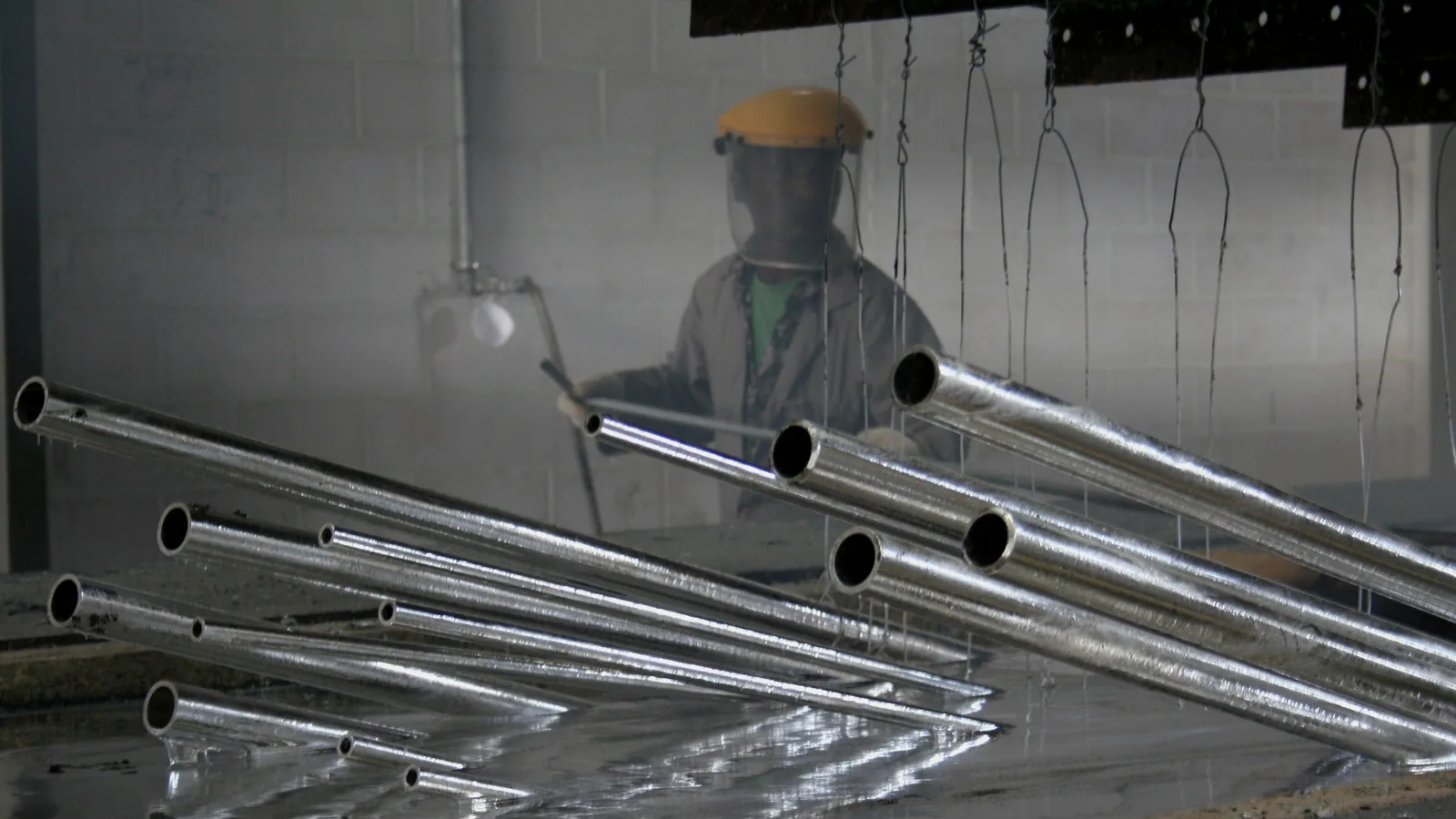
What each one actually does
| Hot-dip galvanising (EN ISO 1461) | Paint system |
|---|
| Mechanism | Zinc-iron alloy layers, sacrificial | Barrier film, no sacrificial action |
| Typical thickness | 55–85 µm (≈ 395–610 g/m²) | 120–240 µm DFT for C3–C4 |
| Life, rural/urban | 25–40 years | 10–15 years before first maintenance |
| Damage behaviour | Small scratches self-heal by zinc sacrifice | Scratch becomes a corrosion start point |
| Appearance | Grey, slightly rough, spangled | Any RAL colour, smooth |
| Cost indicator | Per tonne of steel, roughly 1,800–2,600 CNY/t in China | Per m², strongly dependent on system and colour |
When galvanising wins
- No access for repainting — guardrails, bridge parapets, roof structures, tower internals.
- Abrasion and impact — trailer floors, racking uprights, dock equipment.
- Long design life with no maintenance budget — 25+ years is normal in C2–C3 environments.
- Hidden or enclosed sections — zinc reaches the inside of a hollow section; paint does not.
Detailing rules that decide whether the coating survives: vent holes at both ends of every sealed section, drain holes at the low point, no overlapping surfaces that trap pickling acid, and a minimum wall of about 3 mm for long hollow sections so the 450 °C bath does not distort them.
When paint wins
- Colour matters — architectural finishes, signage, branded equipment.
- Thin wall (below 2 mm) — the zinc bath can warp light sections.
- Site-applied touch-up is easy — accessible structures where a maintenance cycle is planned anyway.
- Duplex would be overkill — indoor dry environments (C1) where a primer alone is enough.
Best practice for exposed structures is the duplex system: galvanise first, then paint. The paint slows zinc consumption and the zinc protects the paint edges; life is typically 1.5–2.5× the sum of the two alone. It costs more upfront and is usually the cheapest option over 30 years.
How to specify it in an RFQ
- Galvanised:
hot-dip galvanised to EN ISO 1461, 55–85 µm, vent and drain holes per drawing
- Painted:
shot blast Sa 2.5, epoxy primer 80 µm + polyurethane topcoat 60 µm, RAL 7016
- Duplex: both lines above, with the paint system rated for zinc substrates
We quote the coating as a separate line so you can see what it costs against the steel. Related: 100, 150, 200.
FAQ
Does galvanising add weight?
Yes, roughly 3–6 % on thin sections (zinc is about 7.1 g/cm³). A 55 µm coating adds around 0.39 kg/m².
Can galvanised tube be welded after coating?
Welding burns the zinc and produces fumes — always weld first, then galvanise. If you must weld after, grind back 50 mm and repair with zinc-rich paint.
How long before galvanised steel shows white rust?
White rust (zinc oxide) forms when newly galvanised steel is stacked wet. Specify ventilation during transport and dry storage on site.
Related sizes