The three certificate types
| Type | Who issues it | Independence |
|---|
| 2.2 | Manufacturer, non-specific test results | None — values may come from the heat, not your tube |
| 3.1 | Manufacturer's authorised inspection representative | Independent of production, results traceable to your heat |
| 3.2 | Manufacturer + a notified body or client's inspector | Highest — required for pressure and structural safety work |
Most structural orders are specified as 3.1. If your contract says 3.2, the inspector signs the certificate at the mill, and you should budget for their attendance.
Field by field
- Heat number — the thread that ties certificate, bundle marking and invoice together. Check that the number stamped on the bundle matches the certificate, not just the paperwork.
- Chemistry — C, Si, Mn, P, S and micro-alloys. For S355/Q355 check that carbon equivalent (CEV) is within your welding procedure; for SPA-H check Cu, Cr, Ni are present.
- Tensile test — yield (ReH), tensile (Rm), elongation (A). The yield figure is the one your design assumed; elongation below 20 % on a structural grade is a warning sign.
- Impact test — only present if you specified a J0/J2/K2 class. Check the test temperature and the absorbed energy (typically ≥ 27 J). A certificate without impact data on a D or E grade is incomplete.
- Dimensional results — wall, outside dimension, squareness, straightness. These are usually spot checks on the first piece of the run.
- Coating — zinc mass in g/m² or coating thickness in µm, measured per EN ISO 1461 or your paint spec.
The three things inspectors reject
- Grade mismatch. Certificate says Q235B, drawing says S355J2H. Even if the tube would pass, the paper trail fails.
- Missing impact values. A "Q355D" certificate with no charpy results at −20 °C is a 3.1 certificate for a different product.
- Heat number not matching the bundle. Usually a packing error at the yard. It is fixable before shipment and almost impossible to fix after.
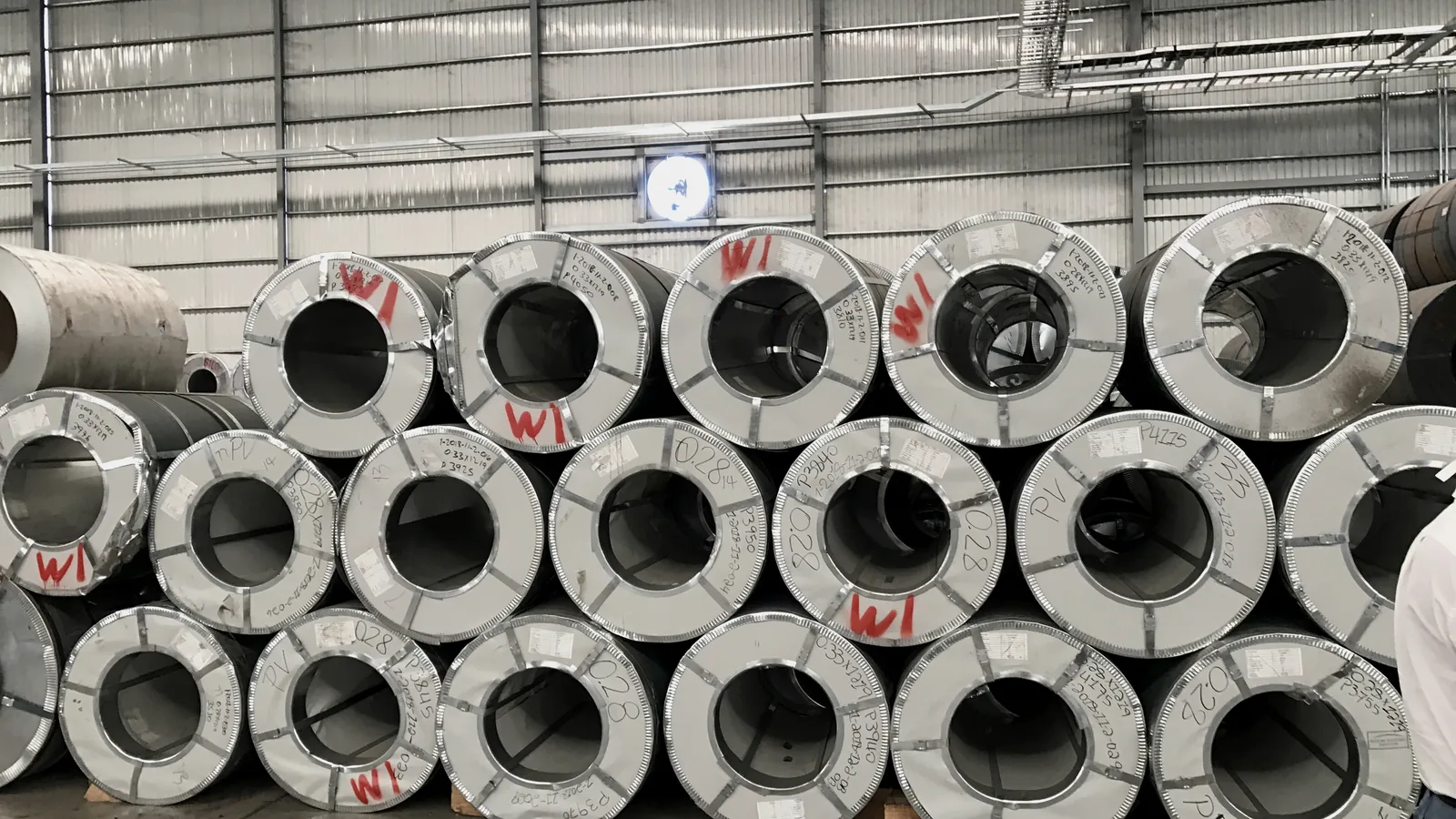
Which is why we photograph every bundle's marking before loading — the photo, the certificate and the packing list all carry the same heat number.
What to ask for
In the purchase order, state: EN 10204 3.1 certificate, heat number marked on each bundle, chemistry, tensile, impact at [temperature], dimensional and coating results. Vague wording like "mill test certificate" is what produces a 2.2 sheet with no test data.
Third-party inspection (SGS, BV, TÜV) is booked 7 days before loading; the cheapest arrangement is inspection during loading, when the inspector can see bundles, marks and container together.
FAQ
Is a 3.1 certificate the same as a test report?
No. A test report may be 2.2 (manufacturer's own declaration). 3.1 requires an authorised inspection representative independent of production.
Can I get 3.2 for a tube order?
Yes, but it needs a notified body or your own inspector at the mill, and it adds cost and lead time. Most structural tube is ordered as 3.1.
Do certificates expire?
The certificate does not, but its validity for a project depends on that project's specification and the inspector accepting the source.
Related sizes